Local view, remote view, or remote reboot?
PDUMH15: local total-current display and thirteen outlets. PDUMNH15: network reporting with eight unswitched outlets. PDUMH15NET2LX: network reporting and eight individually controllable outlets.
None fits if you need more than 12 A continuously, native 208/230 V, battery backup or a documented per-outlet energy measurement capability.
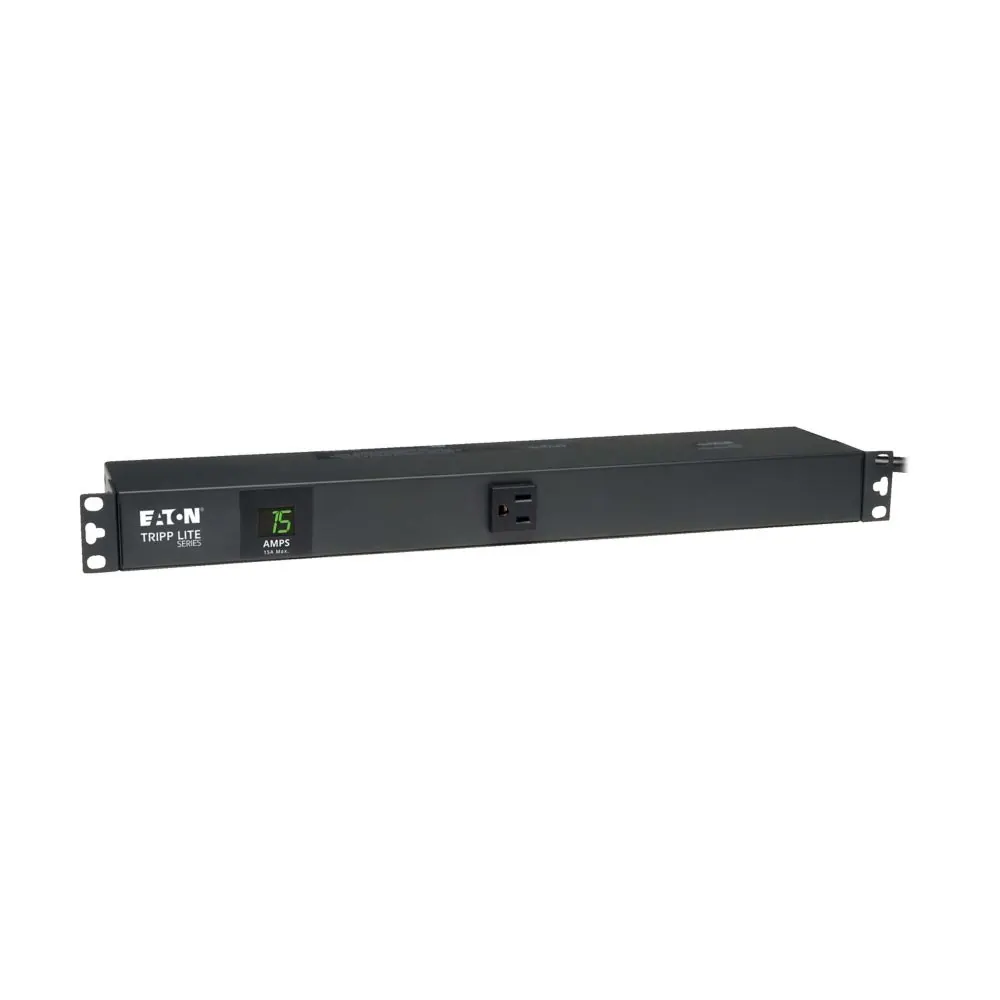
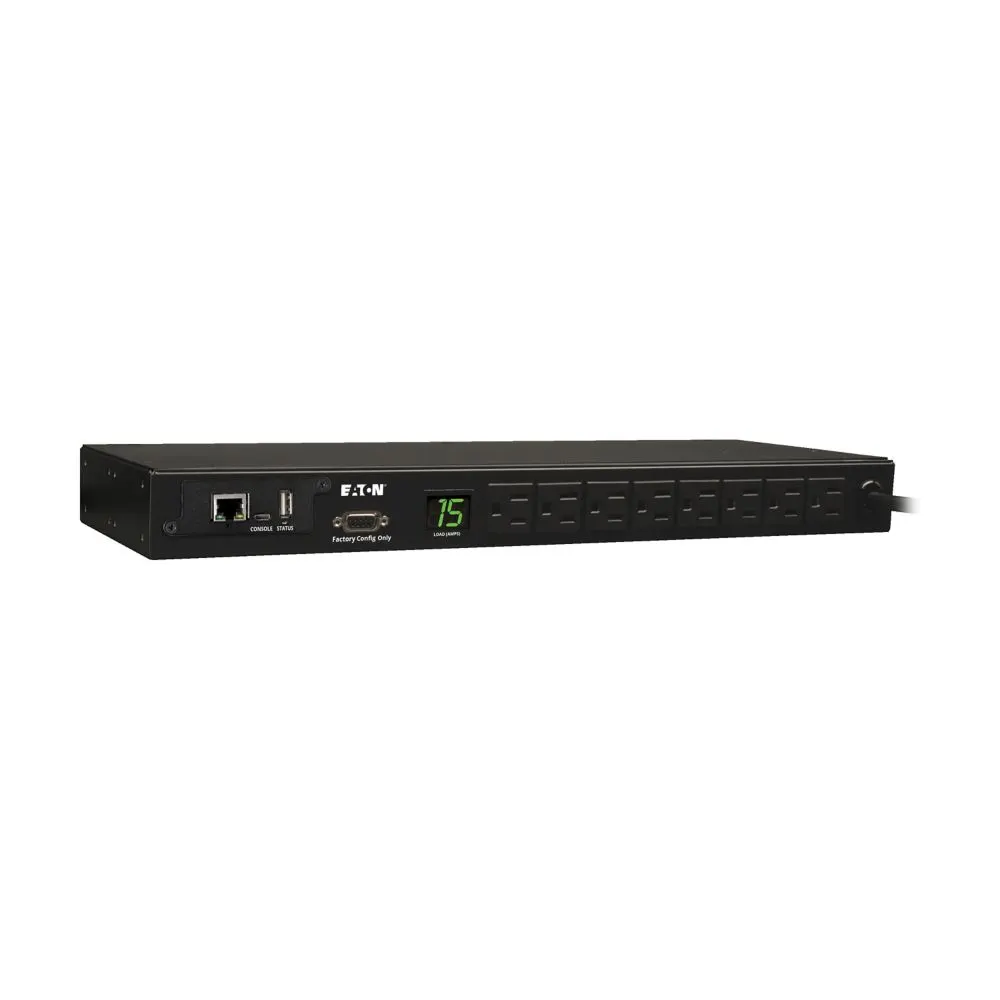
Match the electrical class, then compare features
| Decision factor | PDUMH15 | PDUMNH15 | PDUMH15NET2LX |
|---|---|---|---|
| Management tier | Local metered | Network monitored | Switched + monitored |
| Nominal voltage | 120 V | 120 V | 120 V |
| Continuous total rating | 12 A / 1.44 kW | 12 A / 1.44 kW | 12 A / 1.44 kW |
| Input connector | NEMA 5-15P | NEMA 5-15P | NEMA 5-15P |
| Output receptacles | 13 × NEMA 5-15R | 8 × NEMA 5-15R | 8 × NEMA 5-15R |
| Cord length | 15 ft | 12 ft | 12 ft |
| Rack height | 1U horizontal | 1U horizontal | 1U horizontal |
| Chassis depth | 4.5 in | 6.2 in | 4.25 in |
| Minimum rack depth | 7.5 in | 9.2 in | 7.3 in |
| Local display | Total current (A) | Total current (A) | Total current (A) |
| Network visibility | No network interface | WEBCARDLX included; aggregate load reporting | WEBCARDLX included; aggregate load reporting |
| Outlet control | No outlet switching | No outlet switching | Individual on / off / reboot / lockout |
| Per-outlet power measurement | Not established | Not established | Not established |
| Limited warranty | 2 years | 2 years | 2 years |
Sources: current Eaton product pages and exact-model PDFs linked below. Minimum rack depth is separate from body depth; leave room for the required installation and cabling.
All connected loads share the same continuous rating. Additional outlets and remote management do not add usable electrical capacity. The PDUMH15 provides five more receptacles and a three-foot longer input cord than the other two models.
Choose the capability you will actually use
PDUMH15: local metered
You inspect load at the rack and prioritize receptacle count or cord reach. Check the exact manufacturer specifications before choosing a listing.
PDUMNH15: network monitored
You need remote load information and notifications, with unswitched outlets. Check the exact manufacturer specifications before choosing a listing.
PDUMH15NET2LX: switched + monitored
You need to restart individual loads remotely or sequence their power. Check the exact manufacturer specifications before choosing a listing.
Switching is not per-outlet metering
Being able to turn an individual outlet off does not establish that the unit measures that outlet’s watts or energy. The cited documents describe total-load monitoring. If chargeback or per-device energy accounting matters, require explicit outlet-level measurement specifications.
Networking creates an operating requirement
For either network model, verify current firmware, required protocols, notification setup and access controls before relying on remote functions. The product page’s included card does not prove that a used unit contains the same interface or firmware. We have not tested notifications or remote recovery.
Suffixes and document revisions matter
PDUMH15NET is another model. Its sixteen outlets and 15.5-inch chassis depth differ from the eight-outlet, 4.25-inch PDUMH15NET2LX. Do not substitute the shortened name in a purchase order.
The older monitored-PDU manual still discusses legacy SNMPWEBCARD software. The current exact-model PDF identifies WEBCARDLX. Use documentation that matches the supplied hardware and firmware.
One switched-model drawing contains an inconsistent power table. We use the 12 A / 1.44 kW at 120 V rating supported by the current exact-model page and PDF. Confirm any conflicting document with Eaton rather than selecting the larger number.
The local PDUMH15 provides no surge or line-noise protection and no battery backup. Feature tiers do not establish a surge-protection specification for the other products. Verify each exact model rather than treating every rack distribution device as a surge protector.
Check the exact model and seller
These links open Amazon.com model searches. Results may contain similarly named products, different regions, used units or substitute cards. Match the model, connectors, condition, included interface, accessories and warranty.
Eaton PDUMH15
You inspect load at the rack and prioritize receptacle count or cord reach.
Find PDUMH15 on AmazonEaton PDUMNH15
You need remote load information and notifications, with unswitched outlets.
Find PDUMNH15 on AmazonEaton PDUMH15NET2LX
You need to restart individual loads remotely or sequence their power.
Find PDUMH15NET2LX on AmazonMatch the three models to three operating plans
A staffed rack with routine local checks can often use the PDUMH15's total-current display effectively. Its thirteen receptacles may matter more than network features when the operator's problem is connecting several low-demand devices and checking the combined load in person. The 15-foot input cord is another physical difference worth recording. Neither feature raises the common 12 A continuous limit, and the PDU does not add battery backup.
An unattended branch rack presents a different requirement. If administrators need to see the aggregate load without a site visit, the PDUMNH15's documented network monitoring becomes relevant. Eight outlets may be sufficient even though the local-only alternative has more. The question is whether remote information solves an operational task that a local display cannot. Review the included card, current firmware, supported management protocols, and notification configuration before treating monitoring as ready to use.
A third rack may need a planned remote power cycle for an individual connected device. That is where PDUMH15NET2LX's individually controllable outlets distinguish it. Decide who is allowed to switch power, which devices may be restarted, and what dependencies must remain on. A remotely switched outlet can remove power from an essential network path if the operating plan is wrong. We have not tested recovery behavior or switching delays, so those details must be verified against the current documentation and intended installation.
Prepare an outlet and dependency map
Make a table with one row per connected cord. Record the device, outlet position, expected load, required availability, and any shutdown or restart dependency. For a dual-supply server, map both supplies and the intended power paths rather than assuming that two cords automatically provide independent redundancy. This worksheet makes the difference between monitoring and control concrete: information about a load does not itself authorize removing its power.
Use the same worksheet to check the outlet arrangement and cord reach. The manufacturer drawings are more helpful for this task than an attractive product photograph alone. A plug body can occupy space around adjacent outlets, and the minimum rack-depth requirement is separate from body depth. Match the exact housing, mounting direction, and required access before ordering.
What a network feature does not settle
A network interface does not establish per-outlet metering, a particular security posture, or compatibility with every monitoring system. Require an explicit supported feature for each needed function. If the business case depends on energy reporting for individual devices, the three models in this comparison do not provide documented evidence here that such measurement is included. Choosing a different product class can be more useful than buying a higher management tier within the wrong class.
The final selection should therefore be a capability statement: local aggregate display, remote aggregate visibility, or remote visibility plus individual control. Once that statement is clear, compare connectors, electrical limits, rack fit, supplied interface, seller condition, and current support documentation. That keeps the purchasing decision connected to the actual operating plan.
Primary sources & research limits
- Eaton PDUMH15 product page · Exact-model PDFManufacturer documentation · checked 15 October 2026
- Eaton PDUMNH15 product page · Exact-model PDFManufacturer documentation · checked 15 October 2026
- Eaton PDUMH15NET2LX product page · Exact-model PDFManufacturer documentation · checked 15 October 2026
Recommendations are inferences from documented capabilities. No installation, switching, metering, network or security test was performed. For installation, follow current manufacturer instructions and qualified site assessment. Send a correction.